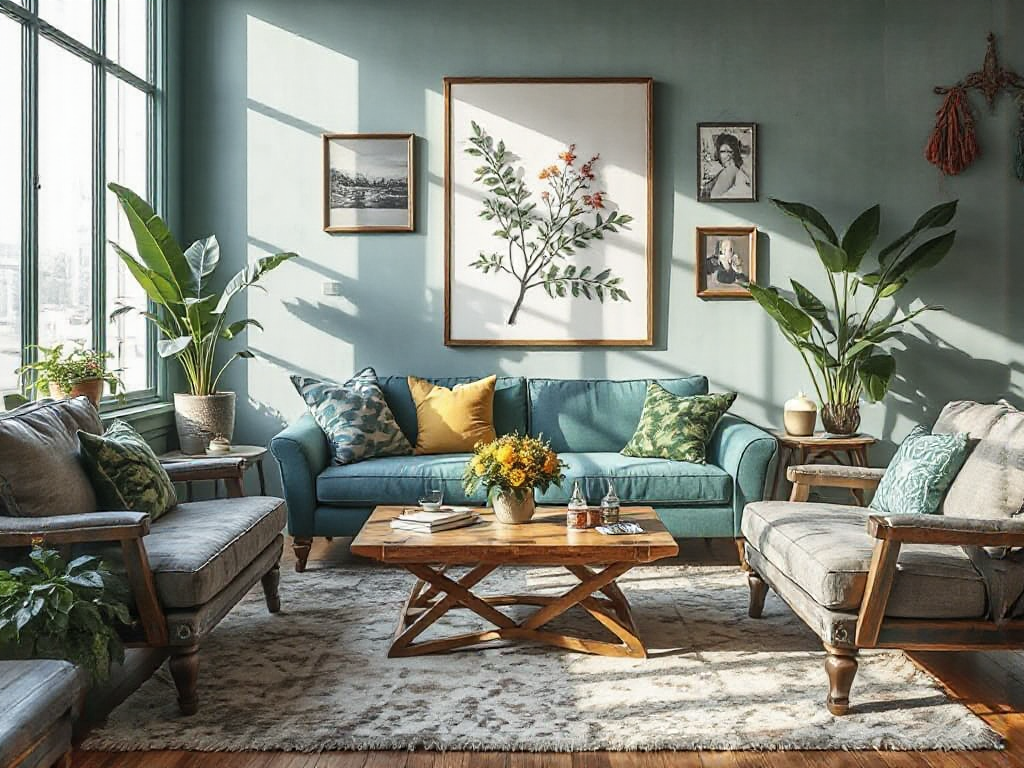
The living room is a silent theater where the coffee table plays the lead role, yet we often treat it as a mere stage for discarded remotes and half-finished mugs. To walk into a home and feel an immediate sense of grounded elegance is to witness a piece of furniture that understands its own gravity. We are moving away from the era of “disposable decor” and entering a renaissance of substance, where the center of the room demands a story. The current trends in coffee tables are not just about surface area; they are about tactile poetry and the architectural soul of a shared space.
The Rise of the Monolith
There is a profound shift toward the “monolithic” aesthetic—solid, heavy forms that look as though they were hewn directly from a mountainside or a prehistoric forest. Stone remains the undisputed king of this movement. We are seeing a departure from the high-gloss, thin-veined marbles of the past decade. In their place, travertine and unpolished limestone have emerged, bringing a raw, porous honesty to the living room.
A low-slung, circular travertine table does more than hold a book; it anchors the energy of the room. Its neutral, sandy palette provides a 70% foundation of calm, allowing the surrounding textures of velvet or linen to vibrate with more intensity. These pieces feel permanent, a deliberate defiance against the fleeting nature of modern trends.
Organic Contours and Fluidity
Sharp corners are retreating in favor of the “kidney” shape and soft, pillowed edges. The psychological impact of a curved coffee table is immediate—it invites movement. In a narrow urban apartment, a soft-edged wooden table creates a flow that a rectangular piece would stifle.
Designers are leaning heavily into “biophilic” shapes—forms that mimic the irregular beauty of nature. Imagine a dark walnut table with a “live edge” that follows the original silhouette of the tree, or a glass-topped piece supported by a base of tangled, reclaimed roots. These tables act as a bridge between the digital coldness of our devices and the grounding warmth of the earth.
Mixed Media and the Industrial Ghost
While minimalism still whispers in the background, a new “maximalism of material” is taking hold. We are seeing a fascinating marriage of fluted wood and smoked glass, or blackened steel paired with woven rattan. The “fluted” look—vertical grooves carved into the base or sides of a table—adds a rhythmic, architectural texture that catches the light in shifting patterns throughout the day.
This trend is particularly effective for those who want to “awaken truth” in their design. It doesn’t hide the construction; it celebrates the weld of the metal and the grain of the oak. It is an approachable kind of luxury that feels earned rather than bought.
The Functional Sculpture
Perhaps the most exciting evolution is the coffee table that doubles as a nesting set or a sculptural centerpiece. Nesting tables are no longer just for small spaces; they are being used to create tiered landscapes in large rooms. By layering a taller, slender metal table over a lower, heavy wooden block, you create a visual hierarchy that keeps the eye moving.
This is the “10% spark” of decorating. A coffee table can be the exclamation point. Whether it is a bold, cobalt blue resin river table or a vintage brass chest found in a dusty corner of a market, the goal is to choose a piece that would look just as beautiful if the rest of the furniture disappeared.
A Lasting Impression
Your home is a reflection of your internal landscape. Choosing a coffee table that aligns with these contemporary shifts—the solid, the organic, and the textured—is an act of self-care. It is about creating a sanctuary that feels both forward-thinking and ancient. When you find that perfect piece, it doesn’t just fill a gap in the floor plan; it completes the conversation of the room.
FAQ
Are glass coffee tables still in style? Yes, but the trend has shifted toward “textured” glass, such as smoked, fluted, or seeded glass, which adds more visual weight and character than clear panes.
What size coffee table do I need? Ideally, your coffee table should be between one-half and two-thirds the length of your sofa and sit at roughly the same height as the seat cushions.
Is marble still a good investment? Marble is timeless, but for a more current look, opt for matte “honed” finishes rather than high-gloss polished surfaces.
How do I style a round coffee table? Use the “rule of three.” Place a tray to hold small items, a stack of books for height, and an organic element like a bowl of moss or a single flower in a vase.
Can I mix wood tones between my table and floor? Absolutely. In fact, a slight contrast—like a light oak table on a dark walnut floor—often looks more intentional and sophisticated than a perfect match.
Leave a Reply
You must be logged in to post a comment.