How do I choose the right size table lamp for my table or room?
Introduction 🌟
Buying a table lamp seems simple until you get it home, set it down, step back… and something feels off. Maybe the lamp looks like it’s looming over the furniture like a watchtower. Maybe it looks tiny and apologetic, barely holding its own. This moment happens to almost everyone, because lamp sizing is rarely explained in plain language.
A table lamp is a quiet architect of atmosphere. It shapes how a room feels at night, how shadows stretch across walls, how cozy or harsh a space becomes after sunset. Size affects everything from comfort to balance to whether your room feels intentional or thrown together on a tired afternoon.
This guide walks you through choosing the right size table lamp in a way that feels human and practical. No design degree required. No confusing math. Just clear thinking, real-life examples, and honest advice that actually works.
Why Table Lamp Size Matters More Than You Think 🔍
A table lamp isn’t just a light source. It’s a visual anchor. When the size is right, the room feels calm and settled. When it’s wrong, something feels uneasy even if you can’t explain why.
Too tall and the lamp dominates the space, blocks sightlines, and creates glare. Too short and it disappears, forcing your eyes to strain while the room feels unfinished. Proportion affects comfort just as much as brightness.
Lamp size also influences how people move through a space. A well-sized lamp invites you to sit, read, talk, relax. A poorly sized one becomes background clutter or an annoyance you keep adjusting.
Start With the Table, Not the Lamp 🪑
The most common mistake people make is falling in love with a lamp before considering the table it will live on. The table sets the rules.
A lamp should never feel wider than the table surface beneath it. As a general visual guide, the lamp base should take up no more than about one-third of the table’s width. This leaves room for practical items like a book, drink, or phone without crowding.
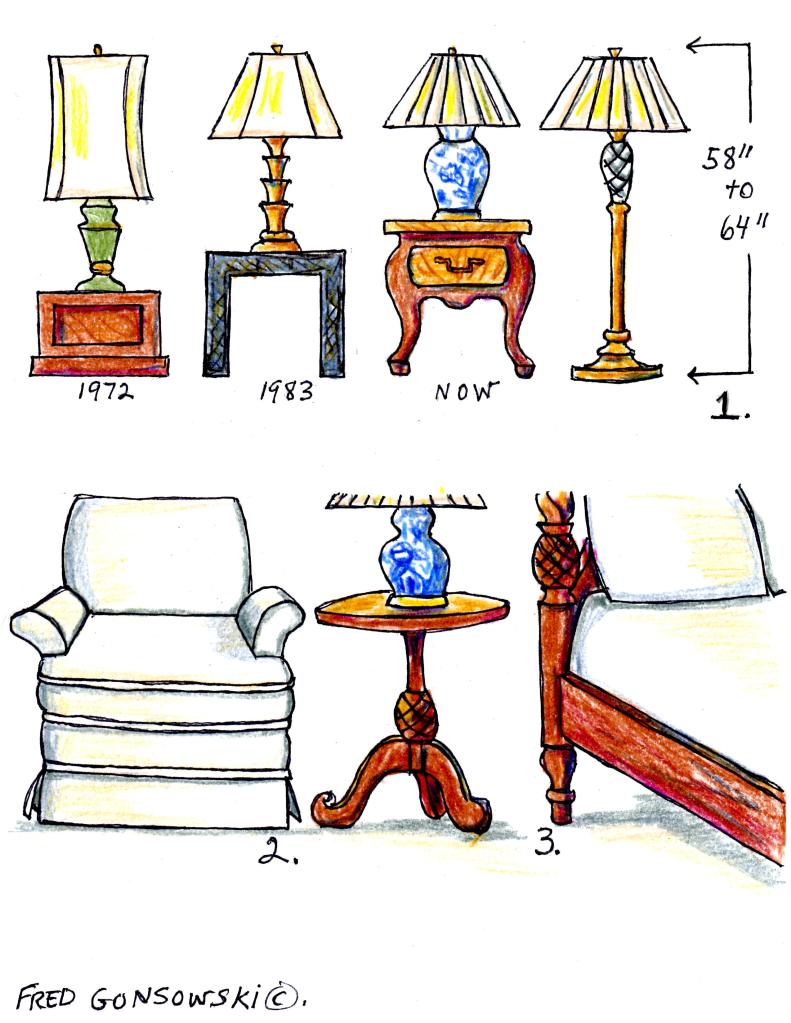
Height matters just as much. A short table needs a taller lamp to feel balanced. A tall table needs a lamp that doesn’t stretch upward too far and overwhelm the space. The lamp and table should feel like they belong together, not like strangers forced into the same room.

4
The Golden Rule of Lamp Height 📏
Here’s the rule interior designers quietly rely on because it works.
When you’re seated next to the lamp, the bottom of the lampshade should sit roughly at eye level or just below it. This prevents glare and keeps the light soft rather than blinding.
For most end tables and nightstands, this usually means a total lamp height somewhere between 24 and 34 inches. Shorter tables lean toward the higher end. Taller tables lean toward the lower end.
If you can see the bulb directly while sitting, the lamp is likely too tall or the shade is too short. If the shade blocks your view entirely and the light feels trapped, the lamp may be too short.
Shade Size Is Not an Afterthought 🎩
Many people focus on the lamp base and ignore the shade, which is a costly mistake. The shade determines how the lamp feels more than the base ever will.
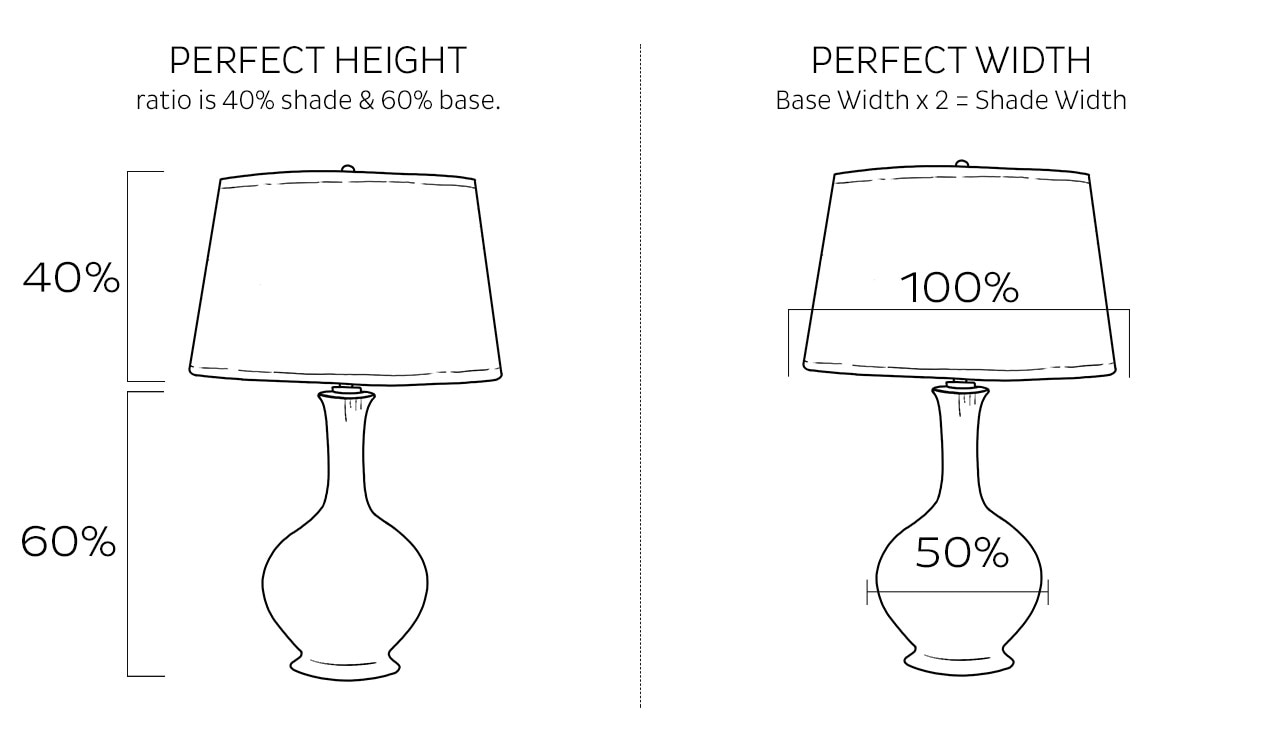
A good rule of thumb is that the shade’s width should be roughly twice the width of the lamp base at its widest point. This keeps the lamp from looking top-heavy or awkwardly narrow.
Shade height also matters. The shade should cover the socket completely and leave just a little space above the base. If the harp and hardware are visible, the lamp looks unfinished.
Wide shades spread light gently across a room. Narrow shades focus light downward. Neither is wrong, but the size needs to match how you plan to use the lamp.
Choosing the Right Size for Different Rooms 🏠
Living Room Table Lamps
In living rooms, table lamps often sit on end tables or console tables. These lamps usually benefit from being slightly larger because they help anchor seating areas visually. A lamp that feels substantial makes the room feel intentional and layered.
Smaller lamps can get lost in larger living rooms, especially if ceilings are high or furniture is oversized.
Bedroom Nightstand Lamps
Bedrooms need balance more than drama. A nightstand lamp should be tall enough to read comfortably but not so tall that it towers over the bed. Symmetry matters here. Matching lamp sizes on both sides of the bed creates calm and order.
Desk or Accent Table Lamps
For desks or accent tables, scale depends on function. A working lamp can be taller and more focused. An accent lamp can be smaller but should still feel proportionate to nearby furniture and wall height.
How Room Size and Ceiling Height Change Everything 🌬️
Room scale quietly affects lamp size in ways people often overlook.
In rooms with low ceilings, tall lamps can feel intrusive. Shorter lamps with wider shades tend to work better and keep the space feeling open.
In rooms with high ceilings, small lamps look lost. Taller lamps help visually bridge the gap between furniture and ceiling, making the room feel connected rather than bottom-heavy.
Open floor plans often need lamps that feel slightly oversized so they don’t disappear into the larger visual field.
Balancing Function and Visual Weight ⚖️
A lamp can be the right height and still feel wrong if the visual weight is off. Heavy bases feel grounded and stable. Slim bases feel airy and modern. Neither is better, but each changes how large the lamp feels.
If your furniture is chunky or traditional, a lamp with some visual weight usually works better. If your furniture is sleek and minimal, a lighter lamp can feel more appropriate.
This is about harmony, not rules. Trust how your eyes react when you imagine the lamp in place.
Common Sizing Mistakes to Avoid 🚫
One mistake is choosing a lamp that matches the table height exactly. This creates a flat, lifeless look.
Another is buying lamps online without checking dimensions. Photos can be misleading. Always check height, base width, and shade diameter before buying.
Mixing lamps of wildly different sizes in the same room can also feel chaotic unless done very intentionally. Consistency helps a space feel calm.
Testing Size Before You Buy 🧪
If you’re unsure, try a simple test at home. Stack books on your table until they reach a height that feels right when you’re seated. Measure that height. That’s your ideal lamp height.
You can also use painter’s tape on the wall to mark where the top of the lamp would land visually. This gives a surprisingly accurate sense of scale.
These small experiments save money and regret.
The Emotional Side of Getting It Right ✨
When a lamp fits its space perfectly, you feel it immediately. The room feels calmer. Light feels softer. Even ordinary evenings feel more intentional.
Good lighting doesn’t shout. It whispers. And size is the reason that whisper feels comforting instead of irritating.
Choosing the right table lamp size isn’t about trends or rules. It’s about respecting proportion, comfort, and how you want a space to feel when the day winds down.
Final Thoughts 🌙
A table lamp should feel like it belongs, not like it’s auditioning for attention. When size, table, and room work together, the lamp becomes part of the rhythm of daily life.
Trust your eyes. Check your measurements. And remember that the best lamp is the one that disappears into the feeling of home while quietly doing its job.